Showing posts with label oil. Show all posts

ExxonMobil and OMV Romania began drilling in the Black Sea

3:17 PM Reporter: Baris Sanli 0 Responses
The following news item from Ukranian news website has important information:

"drilling operations for oil and gas exploration in the Black Sea shelf"

"It will be the Romanian's first deep wheel"

"The drilling rig will be Deepwater Champion, owned by Transocean, used during the operations off the coast of Turkey"
"It is estimated OMV Petrom, drilling will take about 90 days."
"Initial costs for companies on exploration is estimated at $ 150 million"
"If any sufficient reserves are to be found OMV Petrom and Exxon are willing to invest $ 3 billion to $ 10 billion in development projects."
http://www.oilnews.com.ua/news/article13605.html

Read more...

IEA's 60 million barrels and US's SPR

5:25 PM Reporter: Baris Sanli 0 Responses
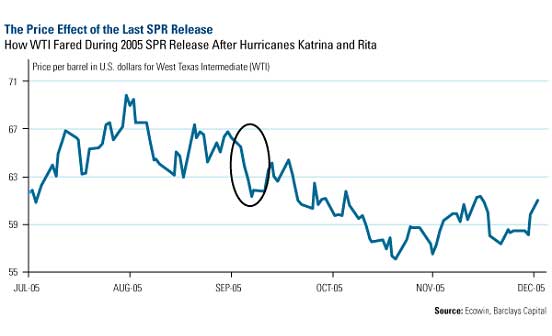
Previous SPR's effect (During Katrina)

On the 23rd June 2011, IEA has decided to release 60million barrels from its 28 members' reserves.
IEA members have 4.1 billion barrels of stocks, some 1.4 billion barrels is for emergency.
They will release 2 million barrels/day for the initial 30 days.

The question is whether this reserves can be traded freely like a normal reserve? Buyers of SPR may not sell it to overseas (Platts)
  • "The auction for 30 million barrels of light sweet crude starts at 1 p.m. CDT on Wednesday, with deliveries occurring between August 1-31."
  • ""No, you cannot sell to Latin America or China," DOE said in an explainer posted to its website. "SPR petroleum may be exported only with an export license and in connection with the return of refined products to the US.""
  • "The US share [30 million barrels] represents 4% of its current stockpile of 727 million barrels"
  • U.S. holds (56 percent) while Japan (24 percent), Europe (14 percent) and Korea (6 percent) of the SPRs.(321 energy)


Ref:
http://www.iea.org/press/pressdetail.asp?PRESS_REL_ID=418
http://www.platts.com/RSSFeedDetailedNews/RSSFeed/Oil/6229240
http://321energy.com/editorials/holmes/holmes0062811.html

Read more...

The cost of oil production capacity

5:19 PM Reporter: Baris Sanli 0 Responses
Manouchehr Takin from Center for Global Energy Studies has a brief summary of oil production capacity costs here.
Here is a summary. Remember that the units is per peak daily barrel. That is if you want to build a 100.000 barrels per day peak capacity for Haradh III, you have to invest $2,500*100.000 = 250 million dollars at least."

Saudi Arabia
- $2,500 (per peak daily barrel) for development of the Haradh III zone of the supergiant Ghawar oilfield
- $10,000 for the massive Khurais et al development a
- $17,500 for the Manifa field

-$40,000 heavy oil projects of Iran
-$85,000 supergiant Kashagan field in Kazakhstan

"

Ref:
The cost of Saudi Arabia’s oil production capacity, Manouchehr Takin, http://www.cges.co.uk/resources/articles/2011/06/21/the-cost-of-saudi-arabia%E2%80%99s-oil-production-capacity

Read more...

Measuring Energy Security

12:15 PM Reporter: Baris Sanli 0 Responses
"Measuring Energy Security: Trends in the diversification of oil and natural gas supplies" by Gail Cohen, Frederick Joutz and Prakash Loungani is an interesting paper to read. They took several indices (supply, imports, political risks, size of importer countries and distance between capitals ) to measure energy security for natural gas and oil

What is interesting was the trend for oil in the computed index(there is a decrease till 1999 and a rebound in 2003.) Also keep in mind:
"For about two-thirds of the countries, there has been a decrease in CSI values – an
increase in measured energy security – between 2000 and 2008. [...] For quite a few countries, the decrease comes about not so much because of mere diversification in the sources of energy supplies but because of the lower political risk associated with some of their suppliers.", p14
My critique: "it is not just the fuel per se, but the importance of fuel in the main consuming sector and the critical level of this fuel for this sector. See for example transportation and its dependence on oil,

Reference:
http://www.imf.org/external/pubs/ft/wp/2011/wp1139.pdf


Read more...

Overseas Activities of Chinese Oil Companies - IEA Report

2:30 PM Reporter: Baris Sanli 0 Responses
IEA has published its new research on Chinese oil companies. The report is full of interesting facts. Also if you follow the sources for graphs you can find valuable reports and presentations such as "Facts Global Energy". My personal feeling is, it is another politically motivated report. Since you can not decouple Chinese Government relations with African countries from Chinese oil companies investments in these countries. However report claims, Chinese oil companies are not the puppets of the government.

IEA facts on China and oil

  • In the next five years, almost half of global oil demand growth will come from China.
  • In 2010, China imported 4.8 million barrels per day of crude oil, up 17.5 % from 2009.
  • By late 2010, Chinese NOCs operated in 31 countries and had equity oil in 20 of these countries.
  • In 2010, China’s NOCs invested nearly USD 16 billion in acquiring assets, such as refineries, in Latin America.
  • 77% of China’s crude oil imports pass through the Strait of Malacca. By 2015, it is estimated that crude oil passing through the Strait to China will rise to 3.5 million barrels per day. In 2009, 3.1 million barrels per day went through the Strait
Links:
http://www.fgenergy.com/?page=article_type&action=read&id=17
http://www.iea.org/papers/2011/overseas_china.pdf

Read more...

From Wikileaks to IEA - Credibility of Peak Oil Theory still worths a look

9:31 AM Reporter: Baris Sanli 0 Responses
A graph from the IEA's report WEO 2010 reveals that IEA believes that the world crude oil production (not including NGL or others) has peaked in 2006 or nearby:

Previously, I asked Mr. Fatih Birol, chief economist of IEA in a conference(in 2008) at METU Alumni Association, whether world will see 100 million b/d (current production of crude+ngl+other is hovering around 85-89 mb/d). He briefly described the nuances between crude oil, crude oil+NGL or other associates of crude oil. Then he stated "I don't think so"(for crude oil only). World Energy Outlook 2010 steps further and addresses a peak in crude oil only production as I marked on the graph.
Wikileaks reveal some interesting documents regarding Saudi Production. Sadad Al Husseini retired head of exploration and production for Saudi Aramco, states that Saudi Production can hardly hit 12.5 million b/d and according to documents :
" as he believes that Aramco’s reserves are overstated by as much as 300 billion bbls of “speculative resources.”
the former Aramco board member does believe that a global output plateau will be
reached in the next 5 to 10 years and will last some 15 years, until world oil
production begins to decline." (Wikileaks)

The cable is from December 10, 2007. But there is nothing to confidential about it. Sadad Al Husseini said these things before. He previously to energy bulletin he writes :
"Therefore my answer is: under the current circumstances and outlook, oil is likely to peak at a 95 mmbd plateau by 2015 and can then be sustained well beyond 2020 at increasing real oil prices."(Energy Bulletin)

So are we peaked or are we on the plateou of world oil production? We should better be careful claiming answers to such questions. But it is easier to say that, oil production will suffer from delayed investment. To get a better understanding of oil prices, we should check the storage levels and price trends during the May -driving season-. My personal belief is we are entering another high price cycle unless another economic slowdown happens. It is a risk to write those things openly on the net, since net has a memory. Prices may calm down? I am desperate to see that...

http://www.energybulletin.net/node/9498
http://www.theoildrum.com/node/7102
http://www.wikileaks.ch/cable/2007/12/07RIYADH2441.html

Read more...

A series of articles regarding oil reserves and prices

4:52 PM Reporter: Baris Sanli 0 Responses
Matthew Simmons' article is the most visited in FP's web site for a couple of days. Before reading his article, as he suggests, check the links in this paragraph:
"The four pieces were Pulitzer Prize-winning author Daniel Yergin's seven-page article in Foreign Policy, energy analyst Michael Lynch's three column op-ed in the New York Times, analyst Edward Morse's essay in Foreign Affairs, and scholar Amy Jaffe's paper published by the Baker Institute at Rice University." http://www.foreignpolicy.com/articles/2009/09/04/oil_spin?page=0,0

Read more...

Exxon's Energy Outlook

5:39 PM Reporter: Baris Sanli 0 Responses

Just like EIA or IEA, oil firms have their own energy outlooks. Exxon's Energy Outlook can be downloaded from their website.


  • Energy demand forecasts are down from 1.3% to 1.2% in this study

  • Fossil fuels will provide 80% of global energy demand by 2030

  • Power generation will see the fastest growth

  • Energy for transportation: Flat in developed countries, doubles in developing ones

  • CO2 emissions rise 30% from 2005 to 2030

Also new section, called “The Energy Imperative,” outlines the need for an integrated set of solutions that includes improved energy efficiency, development of all economically viable energy sources, and cost-effective steps to curb emissions


Ref:


Read more...

CNN Money: China - The new Big Oil

5:07 PM Reporter: Baris Sanli 0 Responses
A brief info about Chinese involvement as a global player in oil sector
  • Russia : $10 billion loan the Chinese government extended to Russia's Rosneft in exchange for a guaranteed cut of that company's production
  • Brazil: With Petrobras, arranging a similar deal with the firm that is developing a huge new offshore field - one of the biggest new discoveries in decades.
  • Argentina: China National Petroleum Corporation is interested in buying all or a part of Argentina's YPF for $14.5 billion, although a deal is far from certain
  • Angola: CNOOC and Sinopec are buying a $1.3 billion stake in offshore Angolan development rights from American oil firm Marathon.
  • Iraq: China National Petroleum Corporation will take the majority stake in Iraq's Rumaila oilfield from BP (BP). Rumaila produces over 1 million barrels a day, and is Iraq's biggest oil field.
Also some comparisons "China National Petroleum Corporation's daily oil production is already roughly equivalent to Exxon's. And PetroChina at one point had a market capitalization twice Exxon's" but "Complex operations - like deep water drilling or liquefying natural gas, are still the domain of the Western oil firms." however : "given their need to develop those deep-water leases off Angola, the Chinese are bound to gain the technical know-how that will put them on-par with the best western firms"

Ref:
http://money.cnn.com/2009/08/17/news/international/china_oil/index.htm

Read more...

Lessons Learned from 2008

4:47 PM Reporter: Baris Sanli 0 Responses
Sadad Al-Husseini a veteran Saudi Aramco exexcutive has came up with a series of suggestions. These may not be new, but can be alarming bell for the next oil price rally in 2010. Some interesting notes:

The oil price surge that started in 2003 and collapsed in 2008 had its
roots in 1998. ....
What action is required?
  • A regularly updated listing of all future oil and natural-gas-liquids (NGL)
    projects.
  • Future capacity costs.
  • Proven reserves categorization.

Creating an institution to house such a process is
the best way to begin to deal with the oil-supply challenges that must surely
lie ahead.

Ref: JPT Online, http://www.spe.org/jpt/print/2009/08/7GuestEditorial.pdf


Read more...

Oil shocks and Recessions

7:57 PM Reporter: Baris Sanli 0 Responses

I found the following website and report quite useful for understanding oil shocks followed by recessions. Here is a list of my key points:

1. "the drops in overall spending that were caused by higher oil prices proved to be the knockout punch for an economy that was already wobbly"
2."The fact that the biggest drop in output didn't occur until well after the oil price went up, and resulted not from the oil price itself but instead from the interaction with other factors and the dynamic forces unleashed when the overall level of economic activity began to decline, is also exactly the same pattern we saw in each of the previous recessions."
3."Was the oil shock of 2007-08 the sole cause of the recession? Certainly not. But did it make a material contribution? In my opinion, the answer unquestionably is yes."

Read more...

Oilwatch Monthly : April 2009

7:20 PM Reporter: Baris Sanli 0 Responses

This version of the report starts with the criticization of IEA numbers, especially China. Crude Oil production is down by nearly 3 million barrels (not world liquid production). Check the oil demand of OPEC countries! There is a big drop in their demand as well. Also, have a look to the Mexico, UK and Norway.

Report is available here (Peakoil.nl)


Read more...

Interactive Rig Count - Baker Hughes

7:07 PM Reporter: Baris Sanli 0 Responses
Baker Hughes(BH) has a very interesting interactive map, that shows you the locations of various drilling activites. It is a sample of their professional work. Their reports are a good indicator for drilling activities. For example, check the following dates and you can easily observe the effects of recession.

On 28 March 2008, there were 1808 rig counts by BH, by the same period in 2009, this number dropped to 1085. A staggering 769 drop. A 42% drop....Report for 30 March 2009.

You can also access the interactive web page from here .or here.
From the page, you can select from various parameters and see the latest data. It is limited to US however it gives a good activity about oil in the world's biggest consumer. On the date I checked it, gas activity was higher than oil activity.


Links:

Report: http://gis.bakerhughesdirect.com/Reports/StandardReport.aspx

Interactive map: http://gis.bakerhughesdirect.com/RigCounts/default2.aspx
or try this link: http://gis.bakerhughesdirect.com/RigCounts/

Read more...

A new financial system?

11:20 AM Reporter: Baris Sanli 0 Responses
Nowadays when making oil price forecasts, one should also consider how the dollar's value will change. Before the G20 in London, interesting discussions are going on.

For example read this from WSJ:

"China called for the creation of a new currency to eventually replace the dollar as the world's standard, proposing a sweeping overhaul of global finance that reflects developing nations' growing unhappiness with the U.S. role in the world economy."

China is not alone, Stiglitz says :"The dollar reserve system is part of the problem," Joseph Stiglitz, the Columbia University economist, said in a speech in Shanghai last week, because it meant so much of the world's cash was funneled into the U.S. "We need a global reserve system," he said in the speech. (WSJ)


Now check the currency reserves of nations:


If there are concerns about dollar's long term future (we do not expect any radical changes in the short term), oil's value in terms of other commodities may stay same but in terms of dollars oil prices may rise.


WSJ : China Takes Aim at Dollar
Chinese Central Bank : Reform the International Monetary System


Read more...

Crude oil - Gold - Euro/USD parity

8:41 PM Reporter: Baris Sanli 0 Responses
The relation between crude oil vs gold and euro is the question I am looking for some time. From my initial studies, following graphs give an idea.

In this graph, log of crude oil is vertical axis and log of crude oil is the horizontal axis

Then check this one:


My conclusions:
1 - Crude and square of euro/dollar parity is in harmony
2 - Recession started hitting by the end of september 2008
3 - Crude and gold relation is broken for sometime
4 - Observe the euro's appreciation against dollar and rise in crude prices

All this means is crude prices will rise, since dollar will lose some of its value. By the end of May 2009, there is a great possibility that we may see 65-70 $ if dollar continues its slow depreciation. May is the start of driving season.


Read more...

World Energy Geology : Interactive Map

1:43 PM Reporter: Baris Sanli 0 Responses
US Geological Survey is one of the most important sources for world petroleum endowment. They have an interactive map, which eases to plot the results of survey. The results of their studies are used as inputs to other very important studies carried by international organizations such as IEA. Some criticize USGS for being bountiful in their expectations. Especially after last year's oil price hike, experts talked about re-examining USGS data.


Neverthless, map is quite nice and user friendly. Also check the other web pages as well. Beware that the results may be old (from 2000).


Map can be reached from this website:
Also check :

Read more...

Oilwatch : March 2009

10:05 AM Reporter: Baris Sanli 0 Responses
"The Oilwatch Monthly is a newsletter that is available free of charge with the latest data on oil supply, demand, oil stocks, spare capacity and exports." (The Oil Drum).


This report is quite useful for getting information about world's prominent oil producers and consumers. It is like an open source, illustrated version of IEA's Oil Market Report. The monthly is prepared by "Peak Oil Netherlands". In this edition, check for Russian, Egyptian, Malaysian and Mexican productions and US, OECD and EU consumptions.
You can download the report from here. Following excerpts are from the intro:

"Instead the cartel is going to focus on reaching 100% compliance with the earlier cuts totalling 4.2 million b/d, between now and its next meeting on 28 of May. So far 80% compliance has been reached, with 3.4 million b/d from 36.08 million b/d total produced last October being cut, resulting in 32.68 million b/d of liquids produced in February 2009. "

"OECD demand in December 2008 was 788,000 b/d lower than in july 2008, OPEC-11 (excluding iraq) was 650,000 b/d lower than in July, and Chinese demand was 687,000 b/d lower. A total decline of more than 2 million b/d, while OPEC in December had only cut production by 1.26 million b/d."

"More recent figures from the Energy Information Administration show that crude oil stocks in the USA increased from 334 million barrels in January to 350 million barrels in February, a level not seen since the beginning of the 1990s. On top of the commercial stocks on land the 50 to 80 million barrels of floating storage in oil tankers on the seas still remain."


Oil Watch Monthly: March 2009
http://www.peakoil.nl/wp-content/uploads/2009/03/2009_march_oilwatch_monthly.pdf

Read more...